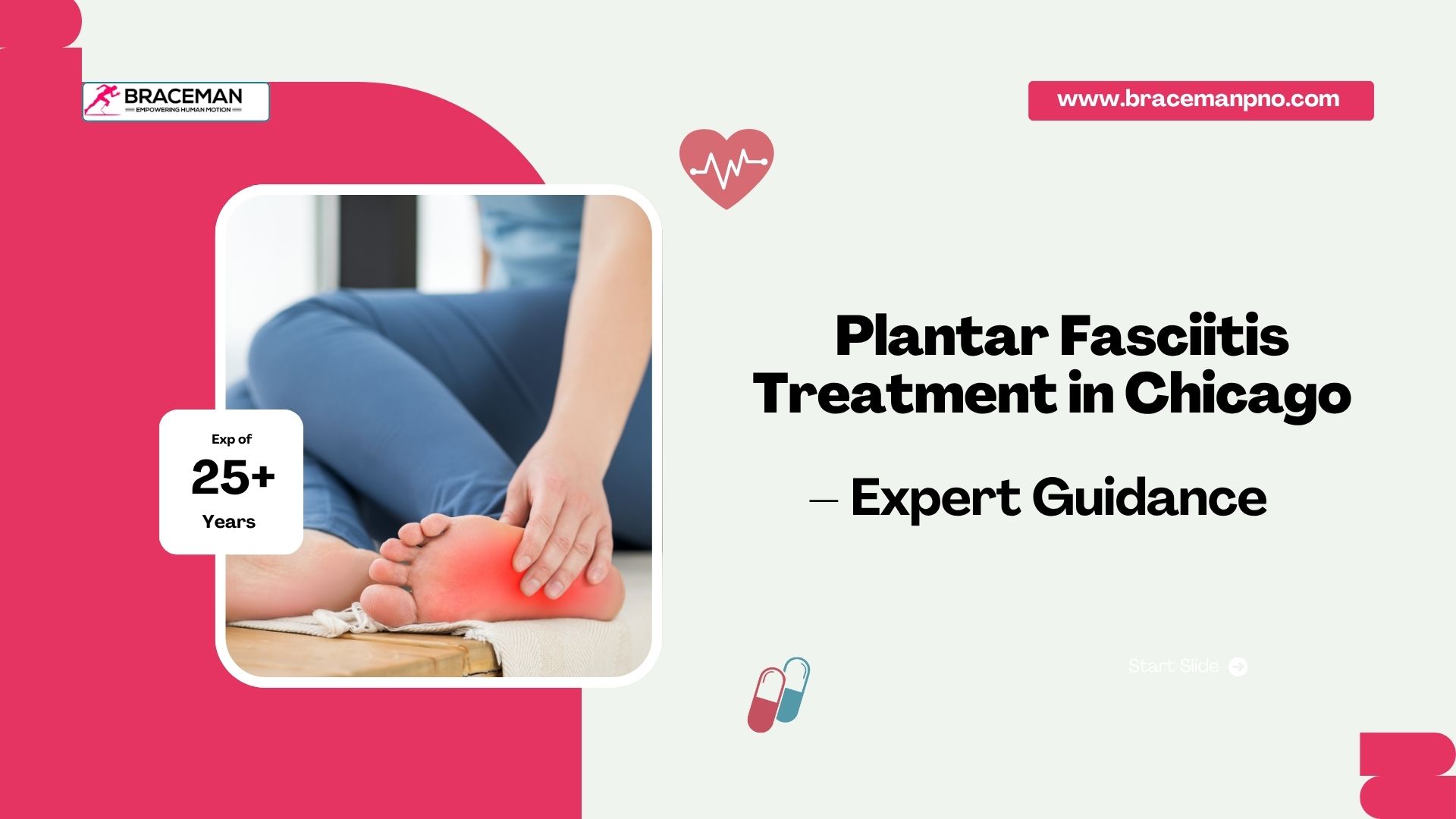
If you are looking for plantar fasciitis treatment in Chicago and wake up every morning to stabbing heel pain, you are far from alone. If you live in Chicago and wake up every morning to a stabbing pain in your heel the moment your foot hits the floor, you are not alone. Plantar fasciitis is the most common cause of heel pain in adults, and Chicago’s combination of hard concrete surfaces, punishing winters, and long commutes on foot creates near-perfect conditions for the condition to develop and linger.
The good news is Plantar Fasciitis Treatment in Chicago responds well to conservative treatment in most cases. The question most patients get wrong is when to bring in orthotics, and what kind actually makes a difference.
What Plantar Fasciitis Actually Is — And Why Chicago Makes It Harder
The plantar fascia is a thick band of connective tissue that runs along the bottom of your foot. They connect the heel bone to the base of the toes. It acts as a shock absorber and supports the arch with every step. When that tissue is overstressed through repetitive loading, poor biomechanics, or inadequate footwear, it develops micro-tears near the heel insertion. The result is a sharp and burning pain that hits hardest on the first step of the morning and after long periods of sitting.
Chicago adds a few specific complications that patients in milder climates don’t deal with. Following are some of the concerns:
- Concrete and pavement. The city’s sidewalks, CTA platforms, and office floors offer almost no cushioning. Prolonged standing or walking on hard surfaces is one of the most consistently identified risk factors for plantar fasciitis (StatPearls, NCBI).
- Cold weather tissue tightening. Cold temperatures cause peripheral vasoconstriction. This means blood vessels narrow, reducing circulation to the feet and causing the plantar fascia itself to stiffen. That tightening is exactly what makes first-step morning pain worse during Chicago winters (Yeargain Foot & Ankle, 2024; Momentum Foot & Ankle Clinic).
- Indoor barefoot exposure. Chicagoans spend more time indoors walking indoors and walking barefoot on hard hardwood or tile floors. The American College of Foot and Ankle Surgeons specifically discourages barefoot walking on hard surfaces for people with plantar fasciitis or those at risk.
- Spring training spikes. Runners, cyclists, and recreational athletes who scale back activity in winter and ramp up suddenly in spring are a classic risk group. Rapid increases in activity load are a documented trigger.
Chicago’s Climate and Plantar Fasciitis: A Season-by-Season Reality
Winter (November – March)
This is when symptoms tend to peak for existing cases. Due to cold weather there is a reduced circulation of blood that stiffens the fascia overnight. This makes that first step out of bed significantly more painful. Chicagoans also trade supportive shoes for winter boots that often have poor arch support. If you’re walking on icy sidewalks with shortened, guarded strides, your gait mechanics change in ways that add asymmetric stress to the heel.
What to do: Prioritize a proper warm-up before any morning activity. You can do calf stretches and plantar fascia-specific stretching before you stand. These are more important in winter than any other time of year. Orthotics inside your winter boots (where possible) matter more than most patients realize.
Spring (April – May)
The injury season. After months of relative inactivity, people resume walking longer distances, return to running, and start outdoor sports. And they do it often in footwear that hasn’t been replaced in two or three years. The fascia, already tight from winter, is asked to do more work than it’s ready for. This is the season when new cases develop and old ones re-emerge.
Summer (June – August)
Warmer temperatures improve circulation and tissue flexibility. This is why symptoms often feel more manageable. The risk in summer is different: flip-flops, flat sandals, and going barefoot at the beach or lakefront. None of these provide arch support, and the American College of Foot and Ankle Surgeons is consistent in discouraging them for anyone with plantar fasciitis history. Summer is also the high season for outdoor events, festivals, and long days on your feet.
Fall (September – October)
Recovery season for some, escalation season for others. Athletes beginning to taper from summer training loads often notice lingering heel pain they’d been pushing through. For people who haven’t addressed the underlying biomechanical problem, fall is when plantar fasciitis tends to quietly worsen heading into another Chicago winter.
Plantar Fasciitis Treatment in Chicago Available — From First Response to Last Resort
Most patients with plantar fasciitis recover without surgery. Clinical data consistently puts that figure at around 85–90% with conservative management. Multiple sources including StatPearls and J Orthop Sports Phys Ther 2023 Clinical Practice Guidelines, point to that. The challenge is that conservative treatment takes time, typically three to six months , and doing it correctly matters.
Here is how treatment usually progresses:
Stretching and self-care (first line):
Calf stretches and plantar fascia-specific stretching are the single most consistently recommended intervention across clinical guidelines. The Achilles tendon and calf muscles directly affect tension in the plantar fascia. Tight calves are one of the most common contributing factors. Stretching before getting out of bed in the morning reduces that initial step pain noticeably for most patients.
Over-the-counter insoles (early conservative):
Prefabricated insoles with arch support and heel cushioning can reduce fascia strain during standing and walking. They work best for mild cases and for patients who respond well to basic arch support. Their main limitation is that they’re built on average foot geometry and provide generic, not targeted, correction.
Custom foot orthotics (targeted, longer-term):
This is where Braceman’s role comes in. Custom orthotics are fabricated from a precise mold or digital scan of your specific foot. This accounts for your arch height, foot width, gait pattern, and the biomechanical dysfunction driving your symptoms. The 2023 JOSPT Clinical Practice Guidelines (Journal of Orthopaedic & Sports Physical Therapy) recommend foot orthoses, prefabricated or custom, as an evidence-supported intervention to reduce pain and improve function in the short term (2 weeks) through long term (up to 1 year). This is particularly for patients who respond positively to antipronation taping.
A 2024 randomized controlled trial (Foot & Ankle Surgery) evaluated different orthotic materials and confirmed orthotic insole intervention produces significant improvements in plantar fasciitis pain and function across short, medium, and long-term follow-up periods. A PMC systematic review (2023, World Journal of Orthopaedics) found prefabricated orthotics with arch support provide measurable symptom relief by reducing repetitive stress on the plantar fascia.
Night splints:
Night splints hold the foot in a dorsiflexed position while you sleep, preventing the plantar fascia from contracting overnight. This is what causes that brutal first-step pain. They work well in combination with orthotics and stretching.
Physical therapy:
Targeted strengthening and stretching programs, guided gait retraining, and hands-on manual therapy can accelerate recovery. A 2022 prospective RCT (J Am Acad Orthop Surg) compared physical therapy with home stretching and found structured PT programs produced stronger outcomes.
Corticosteroid injections:
Steroid injections reduce inflammation and can provide a window of reduced pain. They are not a cure. Repeated injections risk weakening the plantar fascia itself. Most clinicians limit how many a patient receives. They are best used strategically to buy relief while you address the underlying mechanical cause.
Extracorporeal Shockwave Therapy (ESWT):
FDA-approved for chronic plantar fasciitis since 2000. Pressure waves stimulate healing in the damaged tissue. Most patients see progressive improvement through 12 weeks. The 2023 JOSPT CPG notes that ESWT and custom orthotics showed comparable outcomes at the 4-week mark, with orthotics showing stronger physical activity outcomes at 12 weeks.
Surgery:
Reserved for a small fraction of patients. We can say roughly like 5–10% who don’t respond to six to twelve months of conservative care. Plantar fascia release surgery involves detaching part of the fascia to relieve tension. Recovery involves a walking boot for two to three weeks. A return to normal activities is achieved in several months. Long-term outcomes are generally positive, but surgery carries risks and is genuinely a last resort.
Right time for Orthotics in Plantar Fasciitis Treatment in Chicago
Custom orthotics are not the right first move for every case. For mild symptoms that are two or three weeks old, basic stretching and temporary footwear changes often do enough. But orthotics move to the front of the treatment plan when:
- Pain has lasted more than six weeks without significant improvement despite stretching and rest
- You have identifiable biomechanical risk factors which includes flat feet, high arches, overpronation, leg length discrepancy, or a tight Achilles tendon
- You spend long hours standing or walking at work. These include nurses, teachers, construction workers, hospitality workers, or similar.
- You are a runner or athlete returning from winter or a period of reduced activity
- OTC insoles haven’t helped after four to six weeks of consistent use
- You’ve had plantar fasciitis before — recurrence is common when the underlying biomechanics haven’t been corrected
For people in the obese BMI range, the case for custom orthotics is particularly strong. A National Health and Wellness Survey analysis published in The Journal of Pain (Nahin, 2018) found plantar fasciitis prevalence of 1.48% in those with a BMI of 30 or above versus 0.29% in those under 25. This is a fivefold difference. Increased body weight places proportionally greater load on the plantar fascia, and generic insoles are rarely sufficient.
For people who work in weight-bearing jobs on concrete floors, custom orthotics with appropriate cushioning and arch correction can reduce recovery time from several months to roughly six to twelve weeks when worn consistently (Sydney Heel Pain Clinic clinical data).
What Good Custom Orthotics Actually Do in Plantar Fasciitis Treatment in Chicago
A well-fitted pair of custom orthotics addresses plantar fasciitis through several mechanisms. These include:
Arch support. The medial longitudinal arch is the primary load-bearing structure at risk. Custom orthotics support it in the position specific to your foot, not an average foot.
Pressure redistribution. By spreading load more evenly across the foot, orthotics reduce the concentrated stress at the heel insertion point where the fascia is damaged.
Pronation control. Overpronation defined as the inward rolling of the foot with each step lengthens the plantar fascia and increases intrafascial tension. Orthotics designed to control subtalar pronation address this directly.
Heel cushioning. Absorbing some of the impact shock that would otherwise travel through the heel and into the fascia.
The key difference between custom and off-the-shelf is that a generic insole is built to the statistical average foot. Your arch height, pronation pattern, and weight distribution are specific to you. Custom orthotics are built from a scan or cast of your actual foot, which is why they outperform generics for conditions with a clear biomechanical component. A study in Foot & Ankle Surgery (2024) confirmed that custom-fit orthotic designs produce significantly better comfort scores than prefabricated alternatives at the 8-week mark.
At Braceman P&O, every pair is fitted and adjusted by a licensed specialist. It is not purchased off a shelf. This also means orthotics can be modified as your condition improves or your needs change.
You may also find our guide helpful: Essential Features of Diabetic Shoes in Chicago. Many of the footwear principles overlap, particularly around arch support and shock absorption.
Warning Signs: When to Stop Waiting and See a Specialist
Most heel pain responds to home care within a few weeks. The following signs mean you should get a Plantar Fasciitis Treatment in Chicago by a professional rather than continuing to manage it yourself:
- Pain that has persisted for six weeks or more despite stretching, rest, and OTC insoles
- Pain that is getting progressively worse rather than cycling through bad days and better days
- Significant swelling, bruising, or visible deformity around the heel
- Pain in both feet simultaneously (bilateral plantar fasciitis is less common and warrants evaluation)
- Numbness or tingling in the heel or foot. This indicates nerve involvement rather than plantar fascia irritation
- Pain that wakes you up at night
- Inability to bear full weight on the affected foot
Chronic plantar fasciitis if left untreated or inadequately treated for many months can lead to gait changes that shift stress to the knee, hip, and lower back. What started as a heel problem becomes a whole-lower-body problem. Early intervention is faster, cheaper, and less complicated.
Frequently Asked Questions
How do I know if I have plantar fasciitis or a heel spur?
These are often confused because heel spurs frequently appear alongside plantar fasciitis. A heel spur is a calcium deposit that forms on the heel bone. It can be seen on an X-ray but does not always cause pain on its own. Plantar fasciitis is the soft tissue inflammation that more consistently causes the symptoms. Many patients with painful plantar fasciitis have spurs. Also, many with spurs have no pain at all. The treatment for both conditions overlaps significantly. A clinical exam or imaging can differentiate them.
Can plantar fasciitis heal on its own without orthotics?
Yes, in mild cases. The conservative estimate is that 80% of patients treated conservatively see complete resolution after four years, and 90% recover within six to nine months with appropriate non-surgical care (AAFP). But “healing on its own” typically involves stretching, appropriate footwear, activity modification, and rest. It’s not literal inactivity that will cure you. Orthotics become important when you have a biomechanical cause that simply continuing to walk won’t fix.
How long will I need to wear orthotics for plantar fasciitis treatment in Chicago?
For acute cases, patients who wear custom orthotics consistently typically see recovery in six to twelve weeks. Many patients continue wearing orthotics long-term to prevent recurrence, particularly if they have flat feet, overpronation, or a job that keeps them on their feet all day. Well-made custom orthotics last several years with normal care.
Does Medicare cover plantar fasciitis treatment in Chicago?
Medicare Part B can cover therapeutic shoes and inserts for patients with specific qualifying conditions for example primarily diabetes with foot complications. Custom orthotics for plantar fasciitis may be covered under Part B as Durable Medical Equipment (DME) when prescribed by a physician and supplied by a Medicare-enrolled orthotist. But please note that the coverage depends on the specific diagnosis codes and supplier. We recommend verifying with your insurance and speaking with our team about what documentation is needed.
What shoes should I wear in Chicago if I have plantar fasciitis?
Look for shoes with a firm, structured midsole (not a completely flat or flexible sole), good arch support, and adequate heel cushioning. Avoid flat sandals, flip-flops, worn-out sneakers, and going barefoot on hard floors. For Chicago winters specifically, make sure your winter boots have enough interior volume to accommodate an orthotic insert.
Is plantar fasciitis worse in Chicago winters?
For most patients with existing plantar fasciitis, yes. Cold temperatures reduce blood flow to the feet and cause the plantar fascia to stiffen overnight. This eventually directly worsens that first-step morning pain. The combination of cold air, hard indoor floors, and reduced outdoor activity makes November through March the most difficult stretch for plantar fasciitis patients in the city.
A Note on Timing
Most people wait too long. The average patient has been dealing with plantar fasciitis for four to six months before seeking specialist care. By this point the fascia has been repeatedly stressed, the surrounding tissues have often compensated in unhealthy ways, and recovery takes longer.
The condition is rarely dangerous, but it is rarely quick to resolve once chronic. If your heel pain is more than six weeks old and hasn’t responded to basic measures, that is not a sign to wait longer. It is a sign that the underlying biomechanical problem needs a specific solution, not more time.
Explore our full guide here: How to Choose the Right Medical Shoes in Chicago
What Sets Braceman USA Apart
- U.S.-made, clinically approved materials and brands
- Custom orthotics and insoles built to your specific foot scan — not a generic mold
- Evidence-based designs for better biomechanics, posture, and long-term pain relief
- Licensed specialists who fit and adjust each pair for your condition and lifestyle
At our Chicago center, every patient gets an individualized assessment. We look at your foot structure, your gait, your footwear, and your daily demands before recommending a treatment path. The goal is not just to reduce today’s pain — it is to stop the same injury from coming back next season.
#custom orthotics Chicago #diabetes foot care #heel pain chicago #medical shoes Chicago #plantar fasciitis #plantar fasciitis shoes #plantar fasciitis treatment