Prosthetic Leg Chicago

If you’re looking for a prosthetic leg in Chicago, you probably have a lot of questions and very few straight answers. Maybe you’re facing an amputation. Maybe you’re months out and your current leg no longer fits. Either way, you need a prosthetist who asks how you want to move before talking about parts.

More than 10k patients served for insoles for flat feet in Chicago
Patients
0 k+
25+ Years of experience in orthotocs and prosthetics in USA
Years
0 +
Insurance covered for orthotics and prosthetics clinic in Chicago
Insurances
0 +
orthotics and prosthetics clinic in Chicago
Professionals
0 +
Website Appointment Form
Prosthetic Leg in Chicago by Braceman PNO

Conditions We Treat with Prosthetic Legs in Chicago

Every prosthetic leg in Chicago starts with your amputation level, because that decides which components are possible.

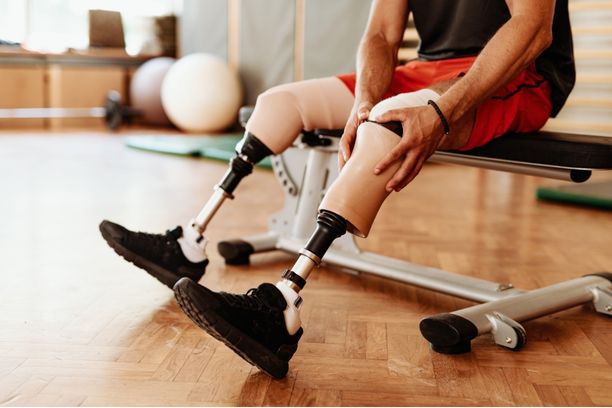
Transtibial (below-knee) amputations keep your own knee, which makes walking more natural. We build a total-contact socket with a silicone or gel liner and match a foot to your activity level, so you aren't fighting the leg on every step.

Transfemoral (above-knee) amputations mean the prosthesis has to replace the knee too. The knee you choose changes how you handle stairs, slopes, and uneven sidewalks, so we spend real time on that decision with you.

Partial foot and Syme's amputations leave very little room below the limb. Our Chicago prosthetic legs for these levels use low-profile designs, such as carbon footplates and custom fillers, that fit inside normal shoes.

Hip disarticulation requires a prosthetic hip, knee, and foot working together with a pelvic socket. It's a demanding fit, and alignment is where we put the most effort.

More Than 20k Patients Have Trusted Our Prosthetic Legs

Our prosthetic legs in Chicago are fitted for transtibial, transfemoral, partial foot and Syme’s, and hip disarticulation amputations. ABC-certified prosthetists, 25+ years of experience, 15+ insurance plans accepted.

How It Works

Assessment

We review your history, examine your residual limb, and ask about your work, hobbies, and goals.

Level and Component Talk.

We explain your K-level (see the FAQ) and the realistic options for feet, knees, and suspension.

Scan or cast

We capture the shape of your limb for the socket.

Test Socket

You try a clear diagnostic socket first, so we can see pressure points and fix them before anything is final.

Definitive fitting and alignment

We build the finished leg and fine-tune alignment while you walk.

Follow-up adjustments

Fit changes, and we change with it. Most tweaks are done on-site.

Prosthetic Leg in Chicago by experts
lower limb prosthetics in Chicago by doctors

Frequently Asked Questions

Have questions about getting a prosthetic leg in Chicago? Below are answers on how long a leg lasts, referrals, FSA/HSA use, K-levels, and what to expect at your Braceman P&O appointment.

How long does a prosthetic leg in chicago last?

Most last three to five years. Sockets often need replacing sooner because your limb changes, especially in the first year or two. Components wear faster with high activity.

Do I need a doctor's referral?

In most cases, yes. Insurance, including Medicare, requires a physician’s prescription. Call us and we’ll help get the paperwork moving.

What is a K-level, and why does it matter?

K-levels (K0 to K4) are Medicare’s classification of your functional ability, from limited household walking to high-impact activity. Insurers use them to decide which feet and knees they’ll cover, so an accurate assessment protects your coverage. Many patients are underclassified, and we’ll document your real activity level.


Why does my socket feel loose after a few months?

Your residual limb loses volume as swelling goes down. Added sock ply can help short-term, but a loose socket often means it’s time for an adjustment or replacement. Come in rather than waiting for skin breakdown.